


CA Democrats Must Stand Up to Big Tech’s Data Centers


Published March 6, 2026
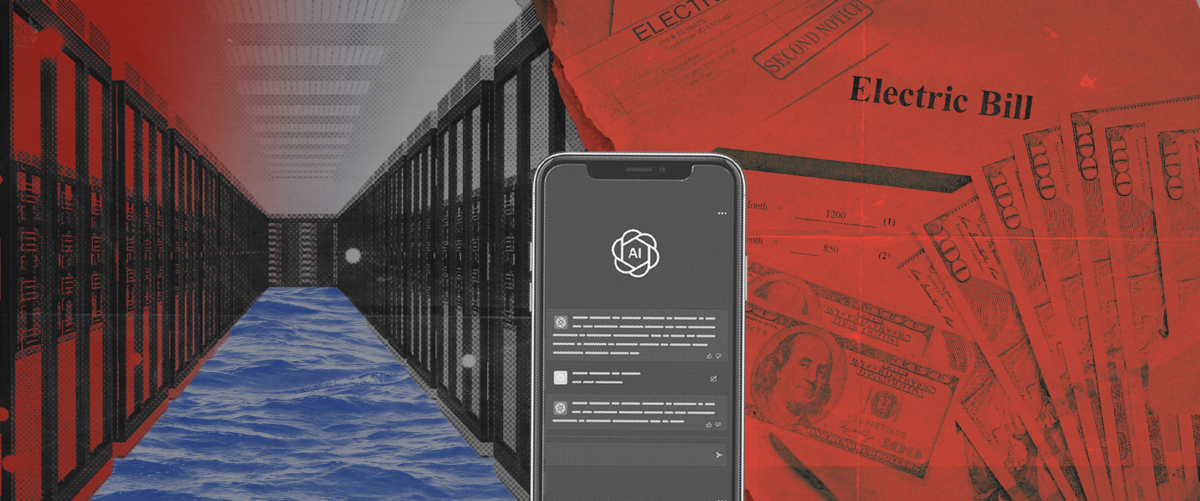
As California gubernatorial candidates prepare to hit the campaign trail, they remain woefully unprepared to meet the moment against AI data centers.
California Democrats recently gathered for their annual convention in San Francisco, just a stone’s throw from Silicon Valley and in the heart of the Big Tech artificial intelligence (AI) explosion. AI is bringing massive wealth to a small number of people, but regular Californians could be stuck with the bill for AI data centers in the form of massive electricity rate hikes and increased demands on our already stressed water supply.
Across the country, communities are rising up to challenge AI data centers. Eleven states have introduced bills to stop new data centers, dozens of communities have passed moratoria or blocked data center projects, and data centers have become a top political issue.
But you wouldn’t know about it from the California Democratic Convention. In conversations with Food & Water Action staff and volunteers, most leading candidates for governor lacked a real understanding of the issue or failed to express policy positions that would protect communities. None of the highest-polling candidates has made this a major issue for their campaign, and the state Democratic Party platform hardly mentions it.
California voters are worried about rising electricity rates, drought, and climate disasters, the very problems that expensive, energy-sucking, and water-guzzling data centers will exacerbate. Candidates must take this issue more seriously and join the growing call for a halt to the AI data center frenzy.
Data Centers Are Here in California, and More Are Coming
California is home to over 60 proposed or already operating data centers. A large concentration of them is in Santa Clara, where data centers consume 60% of the city’s electricity, driving up rates for municipal residents. This explosion in demand could be a boon for Pacific Gas & Electric, the state’s largest utility, which saw an over 40% increase in data center hook-up requests last spring.
Californians also face the threat of higher electricity rates from data centers built in other western states, as the state is poised to enter a regional electricity market after the passage of SB 540 last year.
By one analysis, in 2023, data centers in California consumed nearly 11 TWh in electricity (a 95% increase from 2019) and 13.2 billion gallons of water (a 96%increase from 2019). Public health costs from data center-related pollution in the Golden State tripled over the same time period, to $155.44 million in 2023.
Communities across the state are fighting back against data centers. In January 2026, hundreds of residents flooded Monterey Park City Hall to protest data center development in response to a proposed 250,000 square foot data center. Residents kept the meeting going past midnight, ultimately getting the City Council to commit to drafting a proposal for a 45-day ban on data center development.
Residents in the deserts of Imperial County — one of California’s poorest counties with a majority Hispanic population — are also facing down Big Tech’s behemoths. Data center developer CalETHOS aims to build a data center campus of 4 million square feet, or the size of 60 football fields. Another developer is barrelling forward with a 1 million square-foot data center, attempting to dodge the state’s environmental review process. But community members are fighting back.
California Candidates Remain Silent on Data Centers
Despite California’s strident and growing movement against data centers, leading Democratic candidates for governor have proven silent or uninformed on this issue. The three highest polling candidates — Eric Swalwell, Katie Porter, and Tom Steyer — don’t mention AI or data centers once on their websites as of March 2026. The state Party Platform hardly mentions data centers. They just get a passing reference with a statement that data centers shouldn’t take up farm land.
When questioned at the recent Democratic convention by Food & Water Action, candidates had a range of views, but only former Controller Betty Yee embraced a moratorium. Tom Steyer said that Californians shouldn’t have to pay the economic cost of data centers — but when pressed about a moratorium, he bizarrely claimed that data centers were an issue for other states, but not California.
Eric Swalwell likewise talked about data center companies needing to pay for the resources they use. Xavier Becerra, meanwhile, rejected a moratorium. He said we need regulations, but he was unable to articulate what regulations were needed. And Katie Porter said that we need to move more rapidly on the issue of data centers, but failed to embrace a moratorium or articulate a complete platform for how to address them.
California Dems Must Stand Against Data Centers!
The proliferation of AI data centers will have serious impacts on energy prices, people, and the environment. While Big Tech behemoths — many headquartered in the Golden State — amass ever larger profits, California residents will pay the price. Communities across the state have made it clear: they want to rein in the tech industry and stop these data centers.
The California Democratic Party should take a strong stance against Big Tech and for protecting communities from data centers. It’s clear that the candidates for Governor have a lot of homework to do. California voters deserve more than a few half-baked soundbites and muddled policy positions. And ultimately, they deserve a governor who will be the fighter they need to stand with them against the AI data center onslaught.