


The AI Data Center Boom Is Coming for Farmers


Published June 23, 2026
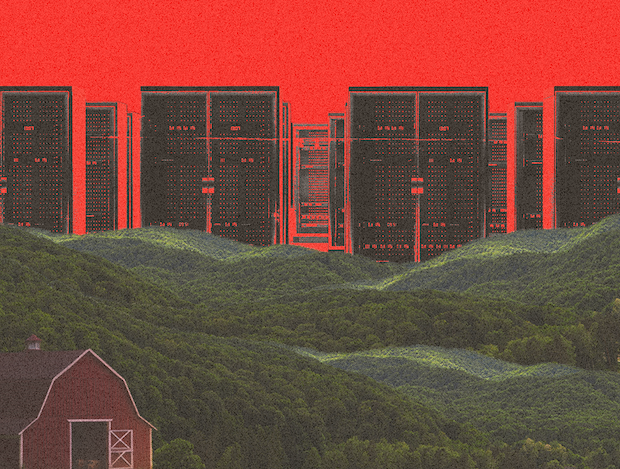
Small and midsized family farmers are already under threat from Big Ag. Big Tech’s AI data centers may make it even harder for them to stay afloat.
Big Tech’s data center gold rush may be coming for a farm near you. These sprawling warehouses, packed with computers increasingly used for artificial intelligence, have massive footprints. Globally, data centers’ land needs are expected to triple in the next five years. And many developers see agricultural land, with relatively few residents to object, as easy pickings.
Developers are trying all sorts of tactics to get their hands on our country’s rapidly dwindling agricultural land. At the same time, farming is already a notoriously expensive and difficult livelihood, in great part thanks to Big Ag’s domination in the field. Corporate industrial farms have overtaken the thriving small and midsized family farms that once defined our food system.
Now, data centers threaten to make a bad situation even worse.
Big Tech is Plowing Through Ag Land for Data Centers
For decades, industrial-scale farms and corporate monopolies have squeezed small and midsized farmers out of business. This system has made margins tighter than ever for farmers. Now, the median farmer income runs in the negatives.
For some developers, this is a golden opportunity. Some are offering wildly inflated sale prices that many farmers can’t refuse. For example, in Virginia, Amazon has paid $700 million for farm land valued at only $115 million. One farmer in Kentucky received an offer to sell his land to data center developers for $8 million — 3,500% more than what he paid decades ago. (He rejected the offer.)
Developers are also working to rezone land, which would change the permitted use from agricultural to industrial. For example, in Montour County, PA, Talen Energy proposed rezoning 800 acres, which would kick farmers off the land they leased from the company. But community members successfully pressured the County Commissioners to unanimously reject the rezoning proposal.
With another sneaky tactic, developers are also pursuing unincorporated rural land, which would allow them to bypass checks like rezoning and land-use reviews that would give the public opportunities to fight back.
Data Centers Make Affording to Farm Even Harder
The United States is hemorrhaging farms, losing over 15,000 in 2025 alone. Yet, the largest farms — those making more than $1 million — actually grew in number. Thanks to deregulation and Big Ag’s growing power, U.S. agriculture is defined by a system where only the largest farms can survive, let alone profit. Smaller, sustainable farms must “get big or get out.”
Data center land grabs are poised to make this problem even worse. From Arizona to Indiana, they’re gobbling up agricultural land. In 2025, Texas lost 2,000 farms in a single year — the highest of any state. Now, it’s an emerging hotspot for data centers. The Texas Farmers’ Union has called for an “immediate halt” on all new data center construction.
Data center development is driving property values higher, which could drive even more farmers out of their livelihoods. This also blocks young farmers from entering the field, as only 2.5% of farmland is expected to be available for sale over the next five years. Those looking to get started will be competing for a small sliver of the pie against wealthy developers who can offer astronomical prices.
Data Centers Harm Farms and Rural Communities
Along with taking land, data centers also bring downsides that directly impact their neighbors. That includes endangering precious water supplies.
For example, in Newton County, Georgia, residents’ taps ran dry after Meta broke ground on a massive data center, and a new well would cost $25,000 — an impossible cost for most families. Moreover, Meta’s data center uses 10% of the county’s daily water use. Water rates are soaring, and the county is on track to be in a water deficit by 2030.
Data center projects in Georgia and Iowa have taken water without notifying officials, and farmers in Texas have reported dry wells or contamination after data center construction.
Many rural communities already face toxic air pollution from factory farms. Data center development may worsen this problem. Data centers rely extensively on diesel backup generators, with some housing hundreds. The generators emit harmful pollutants like particulate matter and nitrogen oxides, which contribute to smog and exacerbate asthma and elderly cognitive decline.
By one estimate, as demand grows, U.S. data centers could contribute to 600,000 asthma cases and 1,300 premature deaths in 2028.
Data centers even produce noise at levels loud enough to reduce cows’ milk production, and they increase land surface temperatures in an area high enough to reduce corn yields. These facilities pose major risks to agricultural communities that developers have failed to address. And while farmers and rural communities bear the brunt of these risks, Big Tech profits.
We Need to Stop Data Centers Everywhere!
For farmers across the country, the land is both a source of livelihood and foundational to family, community, and history. After decades of Big Ag consolidation, Big Tech is entering the arena. But farmers and rural communities are fighting back — and winning.
In Kosciusko County, Indiana, a rezoning proposal failed unanimously. In Hanover County, Virginia, local officials voted against rezoning agricultural land for a 430-acre data center. Linn County, Iowa, passed an ordinance in February 2026 to impose strict limitations on data centers in unincorporated land.
These communities agree with the vast majority of people in this country: data centers must be stopped. From saving precious farmland to conserving our water to stopping runaway electric bills and climate change, there are so many reasons to hit the brakes on these facilities. Now, our leaders must stand up for our farmers, families, and communities and pass a nationwide moratorium on Big Tech’s data centers.
Tell Congress: Support the AI Data Center Moratorium Act!