


Iowans Demand Clean Water Champions


Published October 14, 2026
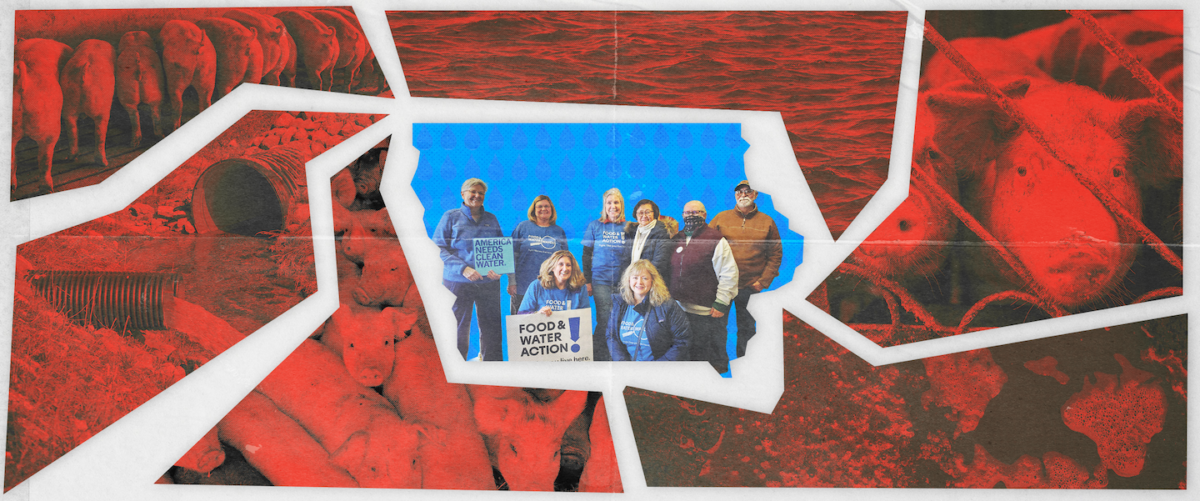
Protecting Iowa’s water is a winning issue for candidates in the upcoming midterms — and it could even shape Democrats’ odds in the House.
Clean water and cancer are on the ballot in Iowa this year, and these issues may decide the balance of power in Des Moines and even in Washington, D.C.
This November, Democrats have an opportunity to take back the U.S. House and put a much-needed check on Donald Trump’s power. They need to flip just five seats — and three of the most hotly contested are in Iowa. Incumbent Republicans in the state’s First and Third Congressional Districts face razor-thin margins against Democratic challengers.
At the same time, our water quality has become a top issue for Iowa voters. This is on par with the rising cost of living. We face a statewide water crisis manifesting in the country’s fastest-growing cancer rate, driven by dangerous nitrate pollution from factory farms and fertilizers, as well as widespread pesticide use.
We need better leaders to stand up to Big Ag and address this crisis. For years, Food & Water Action has been building the power to elect champions who will do just that.
Clean Water Is a Top Issue for Iowa Voters
Iowa’s water crisis cuts deep and wide. Big Ag’s pollution is directly impacting people’s health. Nitrates from factory farm waste are linked to cancer, as are the hundreds of millions of pounds of pesticides spread on Iowa fields annually. This pollution has created a pervasive, fearful distrust of the water coming out of the taps.
“The water crisis in Iowa is one of the biggest problems our state faces,” said Katherine Doran, an Iowa City resident. “I’m fearful to drink it and let my children drink it. It’s horrible that Iowans have to live in fear of our basic needs.”
Big Ag pollution has also kept us out of the rivers and lakes we love. The majority of Iowa counties with beach advisories up until August 2026 also have the highest density of livestock in the whole country.
The water crisis also makes our water more expensive, adding to water treatment costs. The City of Des Moines is forced to run one of the world’s largest nitrate removal plants, with a price tag as high as $16,000 per day. These costs get passed on to ratepayers via higher water bills.
Many Iowans are buying bottled water or expensive filtration systems. “We just put a reverse osmosis water system in our home,” said Laura Brouwer, an Iowa City resident. “It cost about $800. I think agriculture is very important for our state, but I also think they need to be accountable to keep the water and the ground safe for everyone.”
This issue touches so many facets of people’s lives, and we have had enough. February polling commissioned by Food & Water Action found that 82% of Iowa voters would be more likely to vote for an elected official who prioritizes protecting clean water, including by cutting industrial agriculture pollution.
Iowans Want to Rein in Big Ag’s Pollution
In our nearly two decades of working on the ground in Iowa, Food & Water Action has never before seen such broad-based support for clean water protections. Increasingly, people are realizing that those protections require reining in Big Ag.
Central Iowa Water Works serves more than 600,000 people across central Iowa. This past summer, pollution got so bad that it overwhelmed the nitrate removal systems, and the utility had to issue lawn-watering bans. Up to 97% of the nitrogen in the Des Moines and Raccoon Rivers comes from agriculture, including farm fertilizers and manure application on fields.
While Iowans suffer, corporations profit. For example, the profits of the country’s two largest fertilizer companies ballooned to hundreds of millions of dollars in the first three months of 2026.
This past summer, we reached out to Iowans through text messages, phone calls, and door-to-door canvases. Through thousands of conversations, we collected surveys from 330 residents to learn about the big and small ways they’ve been affected.
From cancer survivors attending funerals of friends who didn’t survive their fights, to entire neighborhoods each individually purchasing reverse osmosis systems, we saw firsthand how Iowans are impacted by dirty water in every aspect of life.
The majority of respondents reported feeling unsafe drinking their tap water, and almost every respondent with a well noted it had been affected by pollution.
Anthony Smothers, one such respondent, told us: “For 17 years, I lived on a farm where our well water never passed inspection. We had to have a triple water filtration system in our house in Cedar Falls. But we never passed the test. And we had four kids. I was just always worried. Now we’re in Iowa City, and I’m still worried about my water.”
The Status Quo Can’t Stand in Iowa
Everyone is working to solve these problems individually, but when over 300 of us all report experiencing the same issue, it’s clear this is a systemic problem that will only be solved on a systemic level, by our leaders. So far, state leaders have failed to act.
To “address” nitrate pollution, Iowa has adopted an industry-backed “Voluntary Nutrient Reduction Strategy” that shifts blame to struggling farmers who can’t afford or access conservation programs. Bills regulating the factory farm, fertilizer, and pesticide corporations that pollute our water have been non-starters. State lawmakers also fail to consistently fund regulators who are supposed to watchdog polluters and defend clean water.
“No matter where you are in the state of Iowa, there should be mandated regulations for what goes into the water and what goes into the farmlands,” said Davenport resident Samantha Gaskill. “I don’t feel like so many pesticides should be used. If you disrupt the ecosystem too much, then what’s going to happen in the long run? Shit rolls downhill.”
Food & Water Action has been on the ground in Iowa, building power against Big Ag and its chokehold on state politics. We’ve also worked to hold elected officials accountable for their inaction, from Governor Kim Reynolds to Rep. Marianette Miller-Meeks and Rep. Zach Nunn. Our years of work have helped focus and elevate Iowans’ concerns about the water into a political movement and a force at the ballot box.
Clean Water Candidates Will Win
Iowans are demanding leaders who will take water seriously, and Food & Water Action is working to get them into office. On September 15, we announced our endorsement of 27 candidates for state and national office.
They include Chris Jones for Iowa Secretary of Agriculture. The Secretary of Agriculture could play a key role in addressing our water pollution crisis. Chris is a longtime advocate for clean drinking water, and, if elected, will take on the industrial agriculture polluters who are poisoning our water.
We’ve also endorsed Josh Turek for U.S. Senate; Christina Bohannan (IA-01), Lindsay James (IA-02), and Sarah Trone-Garriott (IA-03) for U.S. House; and 22 more candidates for State Senate and State House who will fight for clean water protections and public health.
These endorsements aren’t just gestures of support. Food & Water Action is canvassing in support of clean water candidates in Des Moines, Iowa City, and Davenport. By election day, we’ll call 20,000 voters and knock on 60,000 doors across the state.
Iowa voters have made it clear: we need real solutions to the clean water crisis. Candidates who fail to address this crisis do so at their own peril.
Check Out Our Full List of Endorsed Candidates:
- Chris Jones for Iowa Secretary of Agriculture
- Josh Turek for U.S. Senate
- U.S. House
- Christina Bohannan (IA-01)
- Lindsay James (IA-02)
- Sarah Trone Garriott (IA-03)
- Iowa Senate
- Cindy Winckler (SD 49)
- Heather Matson (SD 21)
- Herman Quirmbach (SD 25)
- Janice Weiner (SD 45)
- Molly Donahue (SD 37)
- Nikhil Wagle (SD 47)
- Tony Bisignano (SD 15)
- Iowa House
- Aime Wichtendahl (HD 80)
- Andrew Fitzgerald (HD 51)
- Angel Ramirez (HD 78)
- Austin Baeth (HD 36)
- Beth Wessel-Kroeschell (HD 49)
- Cynthia Oppedal Paschen (HD 55)
- Daniel Gosa (HD 81)
- Elinor A. Levin (HD 89)
- Heather Sievers (HD 40)
- Mary Madison (HD 31)
- Megan Srinivas (HD 30)
- Molly Buck (HD 41)
- Shawn Olorundami (HD 1)
- Shawn Ellerbroek (HD 57)
- Tracy Ehlert (HD 79)